Mouse and Rat Control in Toledo, OH
Droppings in the basement once the nights turn cold, scratching in the walls, a rat by the garage. Call (419) 000-0000 and say where you see the signs. A local exterminator finds how they get in, removes them and seals the gaps, and quotes before the work starts.
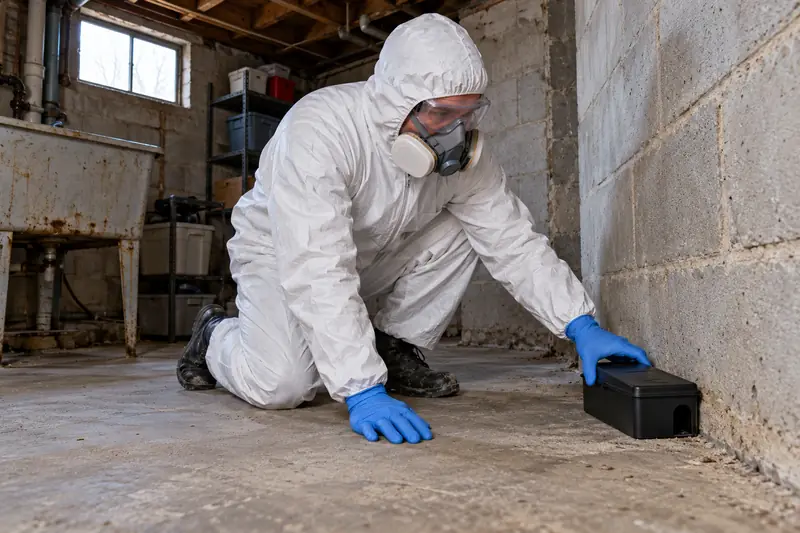
Mice move into Toledo basements and walls from late September, when nights drop toward fifty degrees, and stay all winter if nothing stops them. The exterminator finds how they get in, removes the ones inside and seals the gaps so the house stays closed next fall.
A mouse fits through a gap the size of a dime. In older neighborhoods like the Old West End, Scott Park, East Toledo and Point Place, fieldstone or block basements, old coal chutes and unsealed utility holes are the first places checked. In newer homes in Sylvania and Perrysburg, mice get in around garage door seals and where gas and cable lines enter. Norway rats show up most along the Maumee River, Swan Creek and alleys with open garbage.
Mice, rats or something else
| Animal | Signs | Where in Toledo | What it needs |
|---|---|---|---|
| House mouse | Rice-sized droppings, scratching at night | Basements, kitchens and walls across town | Trapping inside and sealing the gaps |
| Deer mouse | White belly and feet, nests in stored items | Garages and sheds near woods and fields | Trapping, sealing and careful cleanup |
| Norway rat | Droppings about three quarters of an inch, burrows | Alleys and garages near the Maumee, Swan Creek and the Ottawa River | Traps, locked stations and sealing low openings |
| Squirrel, raccoon or bat | Noise in the attic at dawn and dusk, damage at the roof line | Attics and chimneys | A wildlife company |
Knowing which animal it is decides the traps, the gaps that matter and how long the follow-up runs. Raccoons, squirrels, skunks and bats are wildlife and are not handled here.
Signs of mice and rats
- Droppings Rice-sized for mice, about three quarters of an inch for rats, in drawers, behind the stove and in the basement.
- Sounds Scratching in walls and ceilings at night.
- Damage Chewed food packages, insulation, wiring and stored boxes.
- Burrows Holes along the foundation, under sheds and beside garages for rats.
- Rub marks Dark smudges along walls, pipes and joists where they run the same path.
Where mice get into Toledo houses
Fieldstone basements and coal chutes
Many homes in the Old West End, Scott Park, South Toledo and East Toledo still have fieldstone or block basements with mortar gaps, and old coal chute doors that were never sealed when the furnace changed. Both are open doors for mice.
Garage slabs and door seals
Where the garage slab meets the house, and under a worn garage door seal, is the most common way in for newer homes in Sylvania, Perrysburg and West Toledo.
Utility lines and vents
Gas lines, cable, phone and air conditioning lines and dryer vents all pass through the wall, and the gap around each one is often wider than a mouse needs.
Porches and additions
Porches and additions built on separate footings leave gaps at the joint with the house, often hidden behind steps and lattice.
How rodent control is done
- 01
Inspect the outside
Foundation, sill plate, window wells, coal chutes, utility entries, the garage door, vents and the roof line.
- 02
Remove the ones inside
Traps in covered stations along runways, checked on return visits until activity stops.
- 03
Seal the way in
Gaps closed with materials rodents cannot chew through.
- 04
Outside stations where needed
Locked stations along the outside walls for homes near the river, fields or alleys.
- 05
Confirm it is over
Return visits continue until there is no new activity.
Sealing is what ends it. Trapping without exclusion means a new set of mice every fall, so the best time to call is late summer, before the first cold nights.
What is used to seal the gaps
| Gap | Material | Why |
|---|---|---|
| Around pipes and wires | Copper or steel mesh with sealant | Mice chew through foam and caulk alone |
| Coal chutes and old openings | Sheet metal or mortar | Permanent and chew-proof |
| Garage door corners | A rodent-proof corner seal or new bottom seal | The most common way in |
| Dryer and exhaust vents | A metal cover with a damper | Keeps airflow and stops mice |
Rats along the river and the alleys
Norway rats show up most on blocks near the Maumee, Swan Creek and the Ottawa River, along alleys with open garbage and around older garages and sheds, where they burrow beside slabs and foundations. Rat work uses larger traps, locked stations and sealing of low openings, and the conditions that feed them, such as open trash, birdseed and pet food, are pointed out. Restaurants, landlords and warehouses near the river and the rail lines are covered by commercial pest control, which treats the whole property.
Cleaning up safely
- Do not sweep or vacuum droppings dry That puts dust in the air.
- Wet them first With a disinfectant or a bleach solution, then wipe up with gloves on.
- Bag the waste And wash your hands afterwards.
- Leave heavy contamination to a professional Heavily soiled insulation is quoted separately.
What changes the price of rodent control
- Mice or rats Rats take larger traps, stations and more sealing.
- The number of entry points And how high they are.
- The age of the house Fieldstone basements and coal chutes take more work.
- Return visits How many it takes until activity stops.
You hear the price before the work. Every other service is on pest control in Toledo.
Keeping mice out next fall
- Seal in August, not November Mice move in as the nights cool in late September.
- Replace a worn garage door seal And keep the door closed at night.
- Store birdseed and pet food in sealed bins In the garage and the basement.
- Keep firewood and trash away from the house They are where mice and rats wait.
Rodent control questions
Is poison bait used inside?
Not as the plan. Traps and sealing are used indoors, because poisoned mice die in walls and smell. Locked bait stations may be used outside.
How long until the mice are gone?
Usually one to three weeks once the gaps are sealed and the traps are working.
Do you clean up droppings or insulation?
Light droppings are cleaned during visits. Heavily soiled insulation is quoted separately.
Why do mice come back every fall?
The gaps they use have not been sealed. Sealing is what ends it.
How soon can someone come out for mice?
The visit is set on the call for the next open window. Say how long you have seen the signs.
Pests out. Life on.
Call now(419) 000-0000Mon to Fri 8am to 7pm, Sat 9am to 3pm (Eastern time). A person answers, asks what you are seeing and where, then sets up a visit with an independent local exterminator who works your side of town.