Mosquito Control in Toledo, OH
Cannot sit outside after dusk? Mosquitoes breed in water near the Maumee and in every yard that stays wet after rain, then rest in the shade. Call (419) 000-0000. A local technician looks at the yard first and quotes the plan before anything is sprayed.
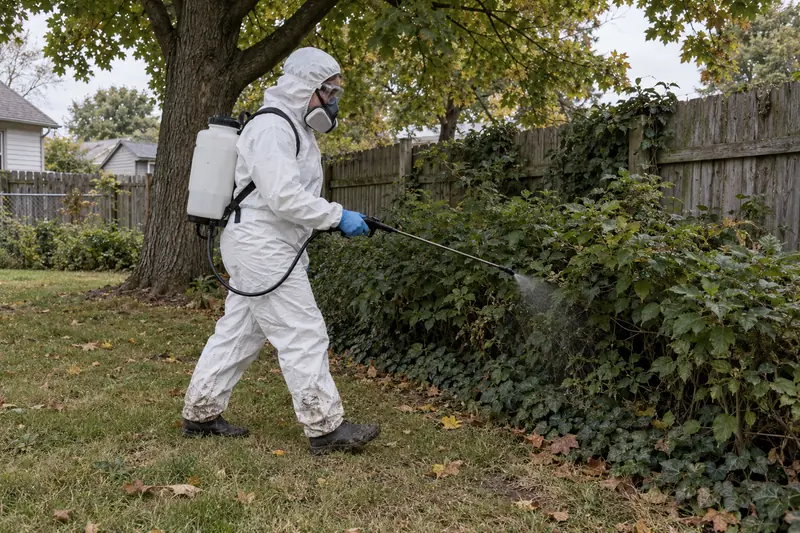
Mosquitoes breed in standing water near the Maumee, the Ottawa River, Swan Creek and the marshes in Oregon, Ohio, and in every clogged gutter and bucket in between. Yard treatments target the shady places adult mosquitoes rest, every few weeks from late spring into fall.
Adult mosquitoes spend the day in shade: dense shrubs, under decks, along fences and in tall grass. That is where the treatment goes. Breeding water is the other half: gutters, birdbaths, tires, tarps and toys that hold water. The technician points those out on every visit.
Mosquitoes around Toledo, Ohio
Northern house mosquitoes
The northern house mosquito breeds in small pockets of still water such as clogged gutters, catch basins, tires and buckets, and bites from dusk into the night. It is the main carrier of West Nile virus in Ohio.
Floodwater mosquitoes
After heavy rain and storms off Lake Erie, floodwater mosquitoes hatch by the thousands from low spots, ditches and the edges of marshes. They fly farther and bite during the day in shady yards.
Asian tiger mosquitoes
A black and white striped mosquito that breeds in containers and bites during the day. It has been found in parts of Ohio, so containers in the yard matter even more.
The Maumee, the marshes and wet yards
Toledo sits where the Maumee meets Lake Erie, with Swan Creek, the Ottawa River and the marshes toward Oregon and Point Place close by. Storms coming off the lake leave low yards, window wells and clay soil wet for days, and every clogged gutter and bucket adds more breeding water. Yards near the river, Side Cut, Pearson Metropark and the bay see the most.
What a yard treatment covers
- Resting areas Shrubs, the undersides of leaves, ivy, under decks and along fences.
- Breeding water Gutters, birdbaths, plant saucers, tires, tarps and toys are pointed out; water that cannot be dumped can be treated.
- The lawn edge Tall grass and the border with woods, where ticks can be added to the plan.
- Schedule Treatments every few weeks from late spring into early fall.
How a yard plan works
- 01
Walk the yard
Every spot that holds water and every shady resting area is noted.
- 02
Price the plan
How many treatments, what is treated and the cost for the season.
- 03
Treat resting areas
With a backpack mister aimed at the shade, not across the open lawn.
- 04
Treat water that cannot be dumped
With a larvicide that stops mosquitoes from developing.
- 05
Repeat on schedule
Through the warm months, adjusted for rain.
Area spraying versus your yard
In Lucas County, the Toledo Area Sanitary District runs mosquito monitoring and area control. That work covers public land, ditches and water. The shrubs, gutters and fence lines in your own yard are still yours, and that is where a yard treatment helps most.
The season in northwest Ohio
| Time of year | What happens |
|---|---|
| May | First mosquitoes after warm rain; the plan usually starts |
| June and July | Peak numbers after storms off the lake |
| August and September | West Nile risk highest; numbers stay high in wet years |
| October | Numbers drop with the first cool nights |
West Nile and dusk
Health departments in northwest Ohio, including Toledo-Lucas County, test mosquitoes for West Nile virus every summer. A yard plan cuts the numbers around the house and deck; it does not replace repellent at dusk or long sleeves near the river.
Pollinators, ponds and pets
Flowering plants are skipped so bees and butterflies are not harmed. Ornamental ponds with fish are not sprayed; a larvicide safe for the pond can be used instead. Kids and pets stay off treated areas until they dry, usually within an hour.
What changes the price of a yard plan
- The size of the yard And how much of it is shade and shrubbery.
- Nearness to water Yards by the river or marshes may need more frequent treatments.
- The season How many treatments it includes.
You hear the price for the plan first. Wasps that build in the same yards are covered on wasp and hornet removal, and every other service is on pest control in Toledo.
What you can do between treatments
- Tip out standing water weekly Saucers, buckets, toys and tarps.
- Keep gutters clear A clogged gutter can breed mosquitoes all summer.
- Drill holes in tire swings and recycling bins So they cannot hold water.
- Change birdbath water twice a week Before larvae can develop.
Ticks at the lawn edge
Yards that back onto woods, like many in Sylvania, Holland and Springfield Township, can add the lawn edge to the plan. Ticks wait in the strip where the lawn meets the woods, in leaf litter and along fences, not in the middle of the lawn, so that strip is treated along with the mosquito resting areas.
Mosquito control questions
Will all the mosquitoes be gone?
No yard treatment removes every one, because they fly in. Regular treatment and removing standing water cut the numbers sharply around the house.
Is it safe for kids and pets?
Kids and pets stay off treated areas until they dry, usually within an hour. Flowering plants are avoided to protect bees.
What if it rains after a treatment?
Treatments are timed around rain. Once dry, the treatment holds up to normal summer showers.
How is a mosquito plan different from a one-time ant job?
An ant job is usually one visit aimed at a colony. Mosquitoes keep flying in all summer, so a yard plan is a series of treatments.
Pests out. Life on.
Call now(419) 000-0000Mon to Fri 8am to 7pm, Sat 9am to 3pm (Eastern time). A person answers, asks what you are seeing and where, then sets up a visit with an independent local exterminator who works your side of town.